Wednesday, December 28, 2011
Thursday, December 15, 2011
Friday, December 2, 2011
Launch of Diane Browne's new 'tween' book
![]() |
| Carlong link |
Readings from the book were done by 7th grade girls from St. Andrew High school to enthusiastic applause. A solo item on pan was given by a St.Andrew High past student, Bianca Welds. Diane herself is a proud past student/teacher of St. Andrew High, as she keeps reminding the rest of us.
It was an event, everyone agreed, which would have made Princess in the story (that's her real name) very proud.(This speaks to the strength of the characterization of Princess. Readers see her as very real.)
Approval of the story was given in several forms- from the CEO of Carlong, Carl Carby admitting that he had read it through twice and thoroughly enjoyed it; to the Director General of the Jamaica Library Service, Patricia Roberts, saying she intended to get a red coat just like Princess on the cover. (She emphasized that she was not joking).
The main address was given by Dorothy Noel, Publishing Manager of Carlong in her usual scintillating style. She emphasized the importance of local literature for our children and the need for support from the public and the Ministry of Education..
Diane Browne's address 'Princess in her own Words' can be read on her blog at
http://dianebrowneblog.blogspot.com/2011/12/princess-in-her-own-words.html
.
From all the anecdotes coming in, there's no doubt about it: the book is a hit. The main theme - how to fit into the new environment in Brooklyn, having been brought up by Granny in Jamaica for thirteen years - resonates with many Jamaicans. Its lively dialogue and presentation of teenage anxieties told in Princess's own words will be familiar to and entertain the 'tween' readers.
I add my exhortation to those of all the speakers. "Buy the book, nuh!"
http://carlongpublishers.com/view_book_details.php?id=217&sid=32&lid=3
See a review
http://geoffreyphilp.blogspot.com/2012/03/book-review-island-princess-in-brooklyn.html
Saturday, November 12, 2011
Memories of Christmas
What memories will today’s children have of Christmas? I wonder. Is it still such a special season for them?
I grew up in Kingston, and my memories of Christmas are still magical. So many things were special only to that season:
– Getting up in the early morning darkness, getting dressed and running to catch the first bus to attend 5 o’clock Christmas morning service on Higholbourn Street – the air seemed to have a special coolness and tingle that it never had during the rest of the year
– The Christmas carols lustily sung by the congregation more casually dressed than it would be for Sunday service
– People greeting one another with seemingly real joy after the service
– Walking to the down town area for the last of Grand Market on the streets and being mesmerized by the stretch of toys, people, excited children, the noises of fee-fees, bursting balloons, vendors calling attention to their wares, some crying from tired or disappointed small children who didn’t get the toy they wanted
– drinking it all in with the knowledge that this wouldn’t happen again for another lo-o-o-o-ng time. (By the way, Santa figures were few and far between then, making it easier to believe in his magic, even if he didn’t visit us since we had no chimneys.)
I remember getting a small replica of a coal stove, a balloon and a fee-fee at Grand Market one year. Another year I got a new doll – priceless! Usually there would be a Christmas hat with streamers or pretty paper frills. Those were all the toys I might get as any extra money was spent on new curtains for our room (rooms as things got better financially) and special food for the day.
And what special food it was. Breakfast could be slices of ham, ackee and saltfish, maybe crisply fried fish, fried eggs, fried dumplings, special hard dough bread shaped like a bird – I was allowed to break off and eat the head, washed down with orange juice or chocolate ‘tea’.
A quick tidying of the house would be followed by helping with the preparations for Christmas dinner – another feast of rice and gungo peas, ham, fried chicken – I don’t remember the other meats as these were my favourites. There would be macaroni and cheese, fried plantain and, of course, sorrel (without rum for the children) and Christmas cake. People would drop in, either invited or not, and share the meal for there was always, just for this day, plenty to go around and be left over for supper. Some would be put in a container and sent for less fortunate persons in the area. Nobody had to go hungry on that day.
Afterwards, everybody would be slightly cross-eyed, the adults from the added rum in the sorrel or just from being overstuffed with food. I remember going to sleep until late afternoon, then getting up to play with my toys. I was an only child but usually there would be other children visiting and we would show off on one another, playing outdoors as there was no television to keep us locked up inside.
Sometimes we would visit other people. Nobody had expensive gifts to share, but people gave what they had. My mother reared chickens and ducks at one stage, and she would send me with one or the other – alive – to the home of some important person in her church who lived nearby. As I grew older, I got increasingly embarrassed about this. I am not sure that these important persons appreciated it either. But, generally, the day would be one of goodwill and friendliness, even for those who could be quite miserable the rest of the year.
A really good Christmas day would be topped up with a visit on the road by a jonkunnu band, mesmerizing us with the drum and fife music, colourful costumes, and sending most of us children scurrying away from the devil’s ‘fork’ or the policeman’s baton, or worse – the horsehead figure which would snap in the most frightening way. So many things were special to Christmas.
At the end of one very good year, I got a wristwatch for Christmas. I didn’t need any other gift – that was really special because I had got into high school –quite an achievement in my community at the time. By that time we were beginning to put up a Christmas tree, complete with ‘snow’from a can and blinking lights sent from America by a cousin.
What does the modern child expect for Christmas? I guess some traditions remain – the visits by family and friends, the extra special meals – but so many things I would have regarded as out-of- this- world are now so commonplace that I wonder what is now special for Christmas? I hope, at least, the goodwill and extra friendliness remain a very strong part of our (new) traditions
Friday, November 4, 2011
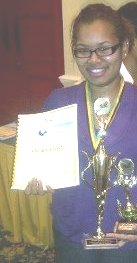
Congrats - JCDC Medal winner
I am so proud of my student from my last writing class, Stephanie Lloyd. She won a gold medal and trophies in the Jamaica Cultural Development Commission's annual Literary Competition for "outstanding writer" (2nd in JCDC's creative writing competition) and "best intermediate short story writer" with a story she started in the class. The course is too short (8 weeks - 4 for adults stories and four for children -2 hours twice weekly) to teach the basics of language use, so those who come in with a good command of English invariably gain more from the class.
Congrats, too, to three other past students who got certificates in the Merit and Honorable Mention categories. By next year they should be in the medal categories IF they continue practising writing.
Great job guys.
Wednesday, November 2, 2011
Creole (patois/patwa) versus Standard English
Our Language Dilemma
Creole (patois/patwa) versus Standard English – the debate continues.
It spills over into writing stories for our children. Some persons, especially the educators, frown on the use of creole in the stories as the children have to learn to use Standard English to pass exams using Standard English. (They speak it – don't let them have to read it, too )
But, more and more, it seems, the creole is the preferred form of speech for many Jamaicans and there are children coming from homes and communities where very little (if any) Standard English is spoken.
Here’s an anecdote. A friend brought her gardener’s two children to church one Sunday morning. They were visiting from a deep rural area. During the sermon the boy, about 10 years old, began to fidget and look distressed. When she asked him what was wrong, he answered, “Me nuh unnertan a wud de man a say.”
Translation, “I don’t understand one word the man is saying.” What are the implications for learning?
We do have two languages.
For the fiction writer, using the creole, or not, presents peculiar problems. Realistically, the writer cannot present a scene on a playfield, for example, and have the children speaking Standard English. They wouldn’t. So what to do? How to represent the reality without offending the gatekeepers? Very often the writers take a sort of middle ground. What is written in the story is a sort of no man’s land with a mix of the Creole and Standard, keeping as close to the Standard as is feasible. Since there is no standard way of spelling the creole words, most use phonetic spelling, or use the Standard spelling of an English word supposing that the creole speaker will interpret correctly. (in the creole). It is sometimes very confused and confusing.
Another problem is that the creole is very fluid. There is a range of usage, some with words seemingly close to Standard English, which creates the impression that the creole is merely ‘broken’ English.
Also, usage differs from parish to parish and from speaker to speaker, so persons will complain that the written creole is not authentic because they are not familiar with a particular form.
I was struck by the language problem again just today when writing a story. I had written this piece of dialogue:
“They all bringing flowers and laying it around the statues now.”
Deeper creole would change They to them(dem). But the problem with meaning is not the difference between them and they but with the word all. A standard speaker would be inclined to believe that the sentence should read – ‘They’re all bringing flowers ....’. A creole speaker would understand that all in the sentence I wrote does not mean all as in everybody, but they are now bringing flowers, or they’ve started bringing flowers...
Of course, the problem intensifies when we think of selling to the overseas market.
I was privileged some years ago to ghostwrite a story for the popular Beacon Street Girls series - Katani’s Jamaican Holiday by Annie Bryant
This is about a girl from Boston, USA, with Jamaican ancestors, visiting Jamaica with her grandmother. The series is meant for American ‘Tweens’. When I consulted the editor about using the creole, she agreed that the flavour would not be authentic if there was no creole usage on the streets and in experiences with the local people. I got around some of the problem, by having the American teen, Katani, ask for explanations. This had to be done judiciously, so that it didn’t become tedious or slow down the story.
When the book was published, some USA children commented that they found the creole difficult. Others were comfortable with it. A few who had Jamaican parentage were thrilled to see it in the story – but I was happy to see that even those who found the creole a bit difficult to understand still enjoyed the story.
I loved Charles Dickens’ stories and devoured them as a child. I didn’t understand all the Cockney speakers, but I could follow the stories.
Mark Twain’s Huckleberry Finn presents similar language difficulties for children here, as teachers soon discover. The last time I taught Huck Finn in a school, I had the class dramatize parts of the story using our creole. They did a good job of it, showing that they understood the story. Children are remarkable people.We very often underestimate them.
An additional challenge is that how language is used often indicates social standing, an issue we might not want to emphasise in children’s stories.
I have no answers to the present situation with our language(s).I wish I could be here many years into the future to see how we resolve the issue. Probably then, Jamaicans will be regarded as truly bi-lingual, moving with ease between both languages and frowning on neither.
As I was about to post this, I read about this conference:
:
As part of its Conferencias Caribeñas 9 lecture series for the 2011-2012 academic year, the Institute of Caribbean Studies of the University of Puerto Rico-RÃo Piedras (UPR-RP), invites the academic community and the general public to the lecture “Research on Multi-Lingualism and Cultural Diversity in Small Island Societies: The Case of Aruba,” by Dr. Lydia Emerencia (Director, Center for Research and Development, University of Aruba).
Aruba is a smaller island than Jamaica where most people speak the four main languages: Papiamento, Spanish, English and Dutch.
There might be some lessons there for us in Jamaica.
Tuesday, November 1, 2011
My thanks to Peepal Tree Press for including the fact that I won a Silver Musgrave Medal in their latest newsletter. Adam Lowe also put in the page reference for reviews of Singerman, my collection of short stories published by Peepal Tree in 1991.And all of a sudden I am back into writing for adults. The creative process is really a strange one.
Reviews http://www.peepaltreepress.com/review_list.asp?au_id=10
Purchase Singerman from Amazon or from Peepal Tree
Reviews http://www.peepaltreepress.com/review_list.asp?au_id=10
Purchase Singerman from Amazon or from Peepal Tree
Friday, October 28, 2011
Using story books to introduce Literature
When geocities closed down their free hosting of websites, I thought all the information would disappear. I am seeing now that they are restoring access to websites they hosted. Below is a link to a page from my former site, which gives basic information on how to assess literary quality in books for grades three to seven. Students in the lower grades in Jamaica do not study 'Literature', this being part of their Language Arts courses. From anecdotal evidence, however, it seems that teachers are sometimes at a disadvantage in helping their students to appreciate the literary quality of the books they recommend their students to read, so they can move beyond merely saying 'the book is interesting/nice etc'. The children, of course, do not have to be bombarded with all of this information. It is aimed at the teachers. Please make judicious use of it.
I hope that the information on this page will help It makes special reference to two books Little Island, Big Adventures by Maria Roberts Squires and The Ring and the Roaring Water by Diane Browne, both published in Jamaica, and for the upper end of this age group.
Please see this information now at http://jambooks-fiction.blogspot.com/2013/08/elements-of-good-story.html

I am making the article as a new post. Elements of a good story. http://jambooks-fiction.blogspot.com/2013/08/elements-of-good-story. http://jambooks-fiction.blogspot.com/2013/08/elements-of-good-story.html
I hope that the information on this page will help It makes special reference to two books Little Island, Big Adventures by Maria Roberts Squires and The Ring and the Roaring Water by Diane Browne, both published in Jamaica, and for the upper end of this age group.
Please see this information now at http://jambooks-fiction.blogspot.com/2013/08/elements-of-good-story.html

I am making the article as a new post. Elements of a good story. http://jambooks-fiction.blogspot.com/2013/08/elements-of-good-story. http://jambooks-fiction.blogspot.com/2013/08/elements-of-good-story.html
Friday, October 21, 2011
Sunday, October 16, 2011
My Silver Musgrave Medal award
I belong to a generation which often forgets to blow its own trumpet.
(Don't boast they used to warn)
So, I forgot to post my most recent shining moment – receiving a
Silver Musgrave Medal for literature from the Institute of Jamaica
on October 12th,.until a friend asked me why I hadn’t done so.
| The Silver Musgrave Medal |
The Musgrave Medal is quite a prestigious honour.
Here’s a bit of its history from the IOJ’s website:
”The Musgrave Medals are awarded to selected
persons for achievements in the fields of literature,
art and science. According to the Institute of Jamaica’s
records, the Musgrave Medal was first awarded in 1897,
as a memorial to Sir Anthony Musgrave, former Governor
of Jamaica who founded the Institute of Jamaica in 1879.
Subsequent to his death in 1888, the decision was taken
by the Board of Governors of the Institute in 1889,
to award medals annually in his honour.
The Medals then were designed by well-known
British sculptor, Alfred Toft.”
Specifically, my award was for “contribution to children's literature
and the encouragement of new writers”- which refers both to my
published books/stories and my teaching of Writing Stories courses
at the Philip Sherlock Centre for the Creative Arts at UWI, Mona.
![]() |
| Me (left) receiving plaque from Minister of Culture Hon Babsy Grange |
It was a proud moment for me.The Institute of Jamaica
on East Street in Kingston was a place for school field trips
to see scientific displays, the Jamaican iguana lizard
( before there was a zoo) and other fascinating displays.
The auditorium was a place for musical recitals,
speech festivals and so on. I never would have dreamed
when I participated in these exercises that I would one day
stand on that platform to receive a Musgrave Medal.
| All Awardees with the Governor General and Minister of Culture
MY PUBLISHER, CARLONG PUBLISHERS (CARIBBEAN) LTD HAS PUT UP A CONGRATULATORY PAGE WITH
THE CITATION http://carlongpublishers.com/view_news_details.php?id=21
My thanks to Carlong
|
Tuesday, September 27, 2011
A Snowman, anyone?
My granddaughter's computer generated art at 6 years of age. Just recently recovered it from my old geocities page. Think I will write an accompanying story. At the time she said it was a snowman melting in Jamaica. Hmm! Hope she doesn't read this page. She's turning into an accomplished artist, so this would embarrass her no end. But, I love it.
Monday, September 19, 2011
Who are we writing for?
This is a question I have asked before. When you are writing from a small country with specific cultural differences to the world’s leading countries, who are you writing for? Your own children or all the children of the world? A tutor once told me – when you write for everybody, you write for nobody.
Eventually, I interpreted that to mean, write from the heart about the things you know and feel and share with your own people. Write out of your culture for your culture. If your work is true, others will come to appreciate it, even if the gatekeepers try to keep you out.
As I like to tell my writing class, and this is my own viewpoint, when Bob Marley and his cronies started writing songs about the things they knew and felt, I don’t think they sat around saying — ‘them gwine love this one in Germany or Japan. This one will wow them in England.‘ I suspect that if they had passed the lyrics of some of the songs by the international gatekeepers they would have been scoffed at – Who in the rest of the world wants to hear about cooking cornmeal porridge in a government yard in Trench Town? Of course, songs have the additional benefit of the music and the singer’s voice and personality to convince and woo, but the principle is the same. They were writing/composing out of their own experiences.
So, should we be unduly worried about the voices from abroad who say our writing and illustration styles are too ‘different’? Our language and illustrations too parochial? The work won’t attract anybody abroad, including our own migrant population ( who now judge us by 'big' world standards) OR, should we continue to write for our children, illustrate for our children, interpret even other people’s realities from our own unique way of looking at things, from our own experiences and most of all from our hearts. We don’t dance like North Americans. Our music is identifiably Caribbean, so too is our cuisine.. Shouldn’t our writing and art be also? Does this make our books inferior?
I don’t think any of our writers, at this point, especially the writers of children’s stories in the Caribbean, expect any of the great financial returns that being ‘accepted’ by the ‘big’ countries might bring. So what are our rewards?
For me, it is reading for a group of youngsters and watching them get excited as the story expands their imagination and reveals things about themselves and their environment they might never have thought of.
I once watched a little boy about eight years old sitting before me with his eyes literally opening wider and wider as the story drew him in and filled his mind with new possibilities. On another occasion, it was a mother saying that her daughter would not go to bed until she had finished reading one of my books. Fortunately, it was not a very long one.
So, to come back to my initial question - who are we (who should we be) writing for? My answer is — our own children. The rest of the world writes for theirs, who will write and illustrate for ours if not us?
.
Subscribe to:
Posts (Atom)