Saturday, March 26, 2011

I'm a Winner!


Hectic weekend of activities with the Book Industry Association of Jamaica (BIAJ) - awards ceremony, illustrators workshops, readings etc.
Just briefly announcing that my book Bernie and the Captain's Ghost won the Best Children's Chapter Book Award for 2011. I am very pleased.


http://carlongpublishers.com/book_listing_subject.php?id=32


Thursday, March 24, 2011

Writing tips for children's writers

Don't mind the 'foreign' voice on the previous post.  Write4Kids allows their writing tips to be re-posted. As an editor, one of the most frustrating tasks is to have to wade through a poorly presented manuscript. In the Caribbean, a gem can sometimes be discovered from a new writer who hasn't learned all they should about how a book gets published, so I will skim through all the manuscripts which reach me. However, it is a real turn off when it is immediately obvious that a writer has not taken the time to learn at least some of the basics of his/her craft. Maybe this 'foreign' voice will help to convince some to do so.

Your enthusiasm is good, but you want the editor to catch your enthusiasm, so please take some time to learn how to present your work. There are lots of sites on the Internet giving free advice to writers.  Here's one -
Write4Kids blog;  http://www.write4kids.com/blog/2011/03/07/do-you-need-kids-to-write-for-kids/

Submitting to Children's Book Publishers: 3 Steps to Avoiding Rejection...

Tuesday, March 1, 2011

How not to sell your books

A book marketing newsletter I subscribe to makes this very important point:
All of marketing consists in creating relationships. Real relationships: friends, lovers, partners, warriors, fans.
Another good point is made by a subscriber describing how she sold many copies of her book at airports, restaurants etc, just by carrying copies of the book and telling people face to face about it- Instant sales.
I know I'm going to vex a few persons who might read this post, but I suspect other Caribbean (Maybe it's only in Jamaica???) writers have my experience with this relationship and face to face selling thing.It's another hazard of our small populations.

 Here's how it usually goes: You are at a function, or you meet persons you know well or not-so-well and after the greeting the conversation will go something  like this:
Friend/Foe:   I hear you have a new book out
Me:              Yeah came out earlier this year
F/F               What's the title again?                                                                                                            
Me               Bernie and the Captain's Ghost (Could be another title) It's a children's book
F/F               Where can I get a copy?
Me               It's in the book stores (Duh!)
F/F               You don't have a copy with you?
At this point you'd better say no, because if you say you do and hand it over this is what is likely to happen
F/F              Looks interesting. My son/daughter/nephew/niece/godchild/grandchild would like this.How much is it?
So you give the price gleefully smelling a sale.Then F/F says: "I don't have any cash on me, but call me later at ....... OR  I'll get it to you later" - and walks away with your book.

AND THAT IS TOO OFTEN THE END OF THAT STORY. F/F is never in when you call and if you buck up him/her later you'll get a kind of blank look. He/she can barely remember having taken your book and attitude will suggest you are planning a scam on him/.her.(You're sure I didn't pay you ?)

Then, of course, writer gets shame and drops the issue. Unfortunate!! People who would never think of going into a restaurant and not paying, have no qualms about getting your book for free. It's a mind set we seem to have- books should be borrowed or gifted, but never bought.

At a launch, people (F/Fs) will come expecting to buy a copy of your book,but after that, it's like pulling teeth with your bare hands.
Is it just me with this experience?????


Tuesday, February 8, 2011

Whose 'tongue'?


Geoffrey Philp posted reference to this article on facebook recently
It contains extremely interesting observations on colonization in Africa and India, and how ‘natives’ were  colonized more by language than the gun. 
Here's an extract:          
When done right, the native comes to elevate and mimic his master’s ways, to see his own culture as inferior, and to look down on his past as ‘a wasteland of non-achievement’. He begins to defer to the colonizer’s ideas on fundamental things like beauty, art, and politics. In time, he begins to understand himself and his culture through the eyes of the colonizer—using the latter’s concepts, categories, and judgments. Before too long, he turns into a proxy for his master: colonialism with a native face.
How does the colonizer gain such control? The easiest method is to actively spread his language among the natives, and to simultaneously denigrate the language of the natives as crude and unfit for proper education.
Consequently, the article continues, ex-colonial writers are still rated by their expertise in, and given recognition for use of the ‘mother’ tongue.  Release from this straight -jacket, it seems to suggest, is for writers to return to writing in the native ‘tongue’.

The Caribbean colonial experience is similar, except that the majority of us, coming from Africa, very early lost our languages and our cultures, which were replaced by a (still) confusing mix (adaptations)  –  of what was forced on us, together with our dim memories.  We were thoroughly creolized. So while Indians and Africans never really lost their languages , what do we in the Caribbean have to fall back on?

Our language debate continues  –  local dialects(languages) versus standard ‘Mother tongue’. It is hardly realistic to write a story about children in Jamaica, for example, and use standard English dialogue only, when the majority of our children speak variations  of our creole.

 My Awakening
In my story Good Morning Corner in a collection entitled Ramgoat Dashalong, the protagonist, a wayward street boy, named Ginseng  is taken off the streets of Kingston  by his grandmother to live with her in her rural home high in the hills of Portland. Ginseng is very uncomfortable and regularly ridicules the customs of these rural folk, is disobedient to his grandmother and rude to the older folk.  He is anxious to return to the street life he left behind. The villagers only tolerate him because of their respect for his grandmother.
Then, one night during a storm, he has a magical encounter with his ancestors and begins to understand the importance of family and community.
One of the ancestors, a powerful African woman, gives him the lecture which changes his attitude.
Great –great-great grandmother Addie stood over him. Her voice filled the cave like thunder rolling in from a far distance. Her words echoed  and re-echoed as if to make sure that all who listened, heard and understood.
“Ef you nuh know where you a come from, you cyan know where you a go. The future can ongle come out a the past. One,one smaddy nuh have no strength. Strength come from all the living which everybody roun you do fi you, and wid you.”
In my first draft I had her delivering these words of wisdom in standard English!  although she had previously been using the creole. That’s my colonial heritage – Creole is for entertainment, mostly laughter. To be taken seriously, her wisdom had to be delivered in Standard English.

I was horrified when I realized how my thought processes were working, so  I revised and creolized her speech.  But even then , in writing the words, they came out nearer standard than how she would sound,realistically.

Of course I had in mind the fact that our dialogue is one of the main reasons agents say that our fiction will not be attractive to foreign publishers or to a foreign audience. Since we, as yet, have no standard way of writing the creole each writer is on his own when it comes to how he presents dialogue. It remains an interesting dilemma -  more so in writing for children than for adults. ( Both teachers and parents are uncomfortable with what goes against the Ministry of Education's preferences. After all, the children have to pass standard English exams!!)
 I tell students in my writing classes that I have no answers.  I do what feels right at the moment. The debate will go on for a while yet.
 

Monday, January 31, 2011

Much More to be Explored in our stories


Once, when I was teaching a short writing course in Trinidad, a student mentioned that she had written a story  for children about a whale washed up on a beach in Trinidad. The overseas publisher to whom she sent it wrote back to say that the story was unrealistic as there were no whales in the Caribbean.

Click on the link below and read this article  

http://repeatingislands.com/2011/01/30/orcas-seen-along-western-coast-of-puerto-rico/


Much more waiting to be explored in our stories for children


Sunday, January 16, 2011

Aspects of Fantasy in Caribbean Children's Books - The Great Divide

Dancing Princesses collage by Shannon


The Great Divide

Without Disney many modern children would not know the classical fairy tales which so fired the imaginations of many of us who are now writers of children’s stories. Indeed, in my country, it is no longer easy to just walk into a book store and pick up a book of fairy tales. They have to be specially ordered.

Interestingly enough, there are increasingly modern variations of these stories, but of course the fantasy remains.

My questions for those who want to write fantasy for children in the Caribbean, in particular,are – what are your reference points? Do you know the heroes/villains of the fantasies children are now watching via video games/cable/television? In your writing can you make reference to these characters with which your readers would readily identify? Can you create the kinds of characters in keeping with the modern child’s expectations?

This comment was made on an earlier post on my blog by a reader:
“I'd like to know, do you think every author should strive to create new creatures, the classical, old ones like vampires, elves, dwarfs, wizards with sharp hats, fairies, etc. are too ordinary already?”

 It's not that they are ordinary, but perhaps passé unless you can give them new attributes and situations which can fire the imaginations of the now generations.(e.g Harry Potter; Disney's Frog and the Princess where the princess turns into a frog when they kiss.)

Many of the characters in the games the children play or the creatures they watch on cable have the same age-old characteristics – there are heroes and villains, (helped by techno 'magic') people in distress, rivalries and conquests, etc.where good fights evil  – win or lose – these never die, but they are in new forms and garments and have new kinds of powers suitable to this age of technology.

I think that this post came to mind because of the voices complaining that our (Caribbean) children's stories are overwhelmingly from the past  –  heavily folkloric or about a quaint rural past.

General advice if you are writing for children is to get to know the modern child. Don’t just depend on your childhood memories. Life is very different for many children, these days. If you have none of your own, get access to children through schools and  children’s organizations;  volunteer to read or assist in some form. Libraries can help you to determine what the children prefer to read. Search the web to see what games are popular. People your fantasy with new creatures; modernize the old ones.

A writer like Helen Williams in Delroy in the Marog Kingdom (Billy Elm) is, I think, on the right track.  My ‘don’t like fiction’ grandson enjoyed this book.

The joyful thing about fantasy is that there is no limitation on your imagination.

For example, as enchanting as some of our River Mumma stories are, perhaps she could do with an update. What if she had hair extensions or Rasta locks and a name change to Sista Tall Hair?  What could happen  when, intrigued by dance hall music, she wants to come on land to dance (sounds a bit familiar?) What other characters would you put in that story? Would she go online to a search engine to find out how to change to human form? Or how to dance with a fishtail? Or start her own dancehall sessions on the reef?

What if our Cinderella (new name) falls in love with the prince who is the son of King Dudus? The glass slipper might be a lost cell phone instead! –  "Call to be picked up at 12 o'clock", but her credit was stolen by the jealous sisters! ( The I-Twos!!)  The ball of course would be a dancehall session. What adventures would she have? And could she influence change in the 'kingdom'?

There are no new stories, just different ways to tell them!


Since I wrote this post, I now have a story on amazon - ebook about a Jamaican Mr King and His daughter

Check it there

http://www.amazon.com/dp/B00ESEWI6I

Tek Mi! Noh Tek Mi!Caribbean folktales Link
**http://carlongpublishers.com/view_book_details.php?id=191&sid=32&lid=13


Friday, January 7, 2011

Are you a writer?


If when you wake up in the morning all you can think about is the story you are writing or the next story you want to write, you ARE a writer. I adapted that from a statement made by Whoopi Goldberg in Sister Act 2.

So what are you doing about it? Are you actively writing? That’s the only way to truly become a writer. Keep writing and re-writing until you are satisfied with what  you have written.

Here are a few tips:

Write something every day- even a page or two.
Read every book you can put your hands on in your chosen genre.
Link up with other writers and don’t be overly sensitive to criticism.
Hone your language skills. Review the grammar and language arts skills you learned at school. There are books to help writers with the mechanics of the language.
Get editing help if you need it BEFORE presenting  your manuscript to a publisher. There is nothing more off-putting to an editor than poorly presented copy.
Search the Internet for sites which can give you information on your areas of weakness.
If self-publishing, be sure to have the work edited by an experienced editor.
Learn how to submit to agents and publishers. In the Caribbean the process is usually quite informal. Check publisher sites for submission guidelines and follow them.
Happy writing! I am hoping to see more Caribbean children’s books published in 2011

Thursday, December 30, 2010

Caribbean children's books - As we enter 2011


One of my new year’s resolutions is to try to catch up on the technology as it relates to books, their promotion and sales. Thankfully, in 2010 Caribbean publishers began to be more aware of the possibilities of e-publishing and using the Internet for promotion and sales.  Frankly, as a writer, I am looking forward to increased royalties from this new thrust.

One of the ways of keeping up with the changes is to subscribe to newsletters and blogs which give information on what is happening. Everybody seems to have a blog these days  - publishers, agents, writers- you name it: OR/AND they are on Facebook and Twitter ( among other social media). Information overload!!!! One has to choose carefully which to follow.

A very useful newsletter I subscribed to in 2010 is publishing perspectives. com. The articles update the reader on activities and trends in the publishing industry - worldwide.

Here’s a teaser from this page
Imagine the future of books not as physical objects, but as relational databases…
  • Autobiographies, written in semi-real-time as the authors live their lives
  • Massively multi-reader “Choose Your Own Adventure”-like role-playing books where everyone’s choices shape the story
  • Serialized novels, like David Copperfield, only infinite and with alternate story lines
  • Recipe books that keep growing and puzzle books that always have more puzzles
  • Multimedia automobile manuals that self-update by pushing recall warnings and maintenance reminders out to you and to mechanics around the world, who then share their fix-it tips with each other and with everyone else
  • Textbooks where student annotations, highlights, and notes are more valuable than the original text, so much so that students can monetize their contributions
  • Series of technical books built with shared chapters: an update to a chapter in one book automatically updates every book in which that chapter appears
I am fascinated by the possibilities for the future of writing. What do you think?


Remember to vote for my book A Goatboy Never Cries at  http://www.bookindustryja.com/children_chapter_book_nominees

Thanks for reading my blog in 2010A happy and prosperous new year to all

Sunday, December 19, 2010

Christmas inspiration for children's story


In my latest book for children Bernie and the Captain’s Ghost, the protagonist and the other five children in the story are all physically handicapped in some way. This is not very common in Caribbean stories; we still have a way to go in accepting and nurturing our disabled people. I have been asked why I chose to make these children disabled.  As usual with the creative process, one is never really sure, but I think the following experience had something to do with it.

For a long time in my house, Christmas was always an anxious time, and I went through the motions but didn't really enjoy it all much. This Christmas, many years ago, changed things, a bit,

One of my daughters having graduated from Mico with a teaching diploma specializing in Special Education went to teach at a school which catered for the disabled.  As Christmas approached and I had my usual anxiety about how it would go, I had an idea to change things. I asked her if the matron of the home where most of the children lived would allow a few to come to us for Christmas day. She was given permission to take six of them home with her, (I think it was because she was a teacher at the school) and we set about preparing for the day. 

By Christmas day my attitude had changed. I realized that in thinking about how to make the children comfortable and give them a meaningful experience, I had forgotten my own fears and negative approach. With my other children we went shopping for presents for the children and took pleasure preparing the Christmas dinner adding things we thought they would specially enjoy.

Not having been around the disabled, I wasn’t sure what to expect, but the day turned out to be very satisfying. We were all happy as we worked to make the children feel special, helping those who needed help and so on..  We enjoyed their laughter and pleasure in some of things we had organized for them, and forgot our petty jealousies, anxieties and other (to be truthful) quite selfish woes.

I think what struck me most was that in spite of their physical disabilities they were just - children.Many years later when I came to write Bernie and the Captain’s Ghost, I think it was those six children who ended up in the story having a wonderful adventure as they solved the mysteries at Green Valley  during a strange summer holiday.

P.S.  It would be nice if some good Samaritans would contact Carlong and purchase some books to give to Children's Homes. These kids don't often see themselves as heroes in stories.
Carlong contacts:
webpage http://www.carlongpublishers.com/view_book_details.php?id=206&sid=32&lid=13
email marketing@carlongpublishers.com
phone: 876 9609366
My thanks


Sunday, December 12, 2010

Caribbean children's fiction - A child's view of Christmas

For Daniel
I love Christmas. Presents!  I love Christmas. Presents! That’s mostly what I can think of. This last week of school is not nice. The days just seem so long, while I wait for Christmas. Presents!

Mrs. Chin says we have to practise for the Christmas concert.  Every December we have to practise songs and plays and stuff to amuse our parents. My class is doing the Nativity scene. Someone gets a dolly and puts it in a cradle, and there’s a Mary and Joseph and wisemen and shepherds and angels.

I want to be Joseph, but Mrs. Chin says I have to be an angel. The angels have to sing a whole lot of songs. I am not going to remember them.  I want to be Joseph to help Mary open the presents the wisemen bring for baby Jesus. We‘re not supposed to open  them but last year the girl who was Mary said she didn’t know what Franky sense and Myrth were, but she thought the gold would be a chain or a bangle she could wear.  I think she forgot that Jesus was a boy. Mrs. Chin warned this year’s Mary not to touch the presents, but since she didn’t warn Joseph, If I was Joseph, I would open them.

Anyway, only the bright sparks Melvin and Joanna know  the words of the songs we angels have to sing, so this morning I asked Mrs. Chin If I could be the angel Hark. 

“There’s no such angel.” she barks at me.She doesn't have much patience at this time of year.

“Oh yes,” I tell her.  “He’s the angel who sings, you know ‘Hark, the herald angel sings’” Jeez, you would think  Mrs Chin would know that. If I am Hark I only have to sing ‘Glory to the newborn king’.

Mrs. Chin looks at me with that look grownups have when they are trying not to laugh, then she runs out of the room.Maybe she needs to use the bathroom. Soon we hear laughter coming from the staffroom. Somebody is giving jokes. I guess they are happy. It’s Christmas. Presents!

 I wish Mrs Chin would hurry up and come back. I am ready to be Hark and sing my one line: ‘Glory to the new born king .’ over and over. I can do that real good.

Please vote for my chapter book A Goatboy Never Cries at http://www.bookindustryja.com/vote_children_chapter_book_nominee

Thursday, November 25, 2010

Animals in our children’s books

Being an island, we don’t have a wide variety of animals in Jamaica. We inherited lions and tigers and other continental animals in our Anansi stories from Africa. The steady diet of books from foreign countries means that our children mostly see a lot of bears and wolves and elephants and giraffes and so on .

Once, some years ago my young daughter came home with an assignment from school; she had to draw an animal. When I asked her what kind of animal she wanted to draw, she said :”A squirrel, of course.”  I asked her why she didn’t pick one of our own animals since we don’t have squirrels in Jamaica. I could see her thinking about this with a kind of surprised look on her face. Then she said : “We don’t have any animals.” As far as she was concerned the only valid animals were those in books and on television.

The children are probably wiser now, but we still don’t see a lot of our own fauna in the children books. We could raise the children’s consciousness of our environment if more of our books featured our own animals.

Read some interesting findings on the value of animals in children’s stories in this article:
Animals and nature are top page-turners for children across generations, says new reader research At http://www.pearson.com/media-1/pearson-news/?i=1336

The research is based in the UK but it certainly provides food for our own thoughts. Local research- anyone?  Here's an excerpt:
Booktime’s research, which polled over 1,500 parents and carers across the UK, also showed that reading books featuring animal characters motivates children to find out more about the natural world: 44% of children are inspired to want to go to a farm, zoo or safari park to see the animals for themselves. 90% of respondents stated that reading books about animals increases their child’s interest in the natural world and more than half of Britain’s parents report that their children are more inquisitive about animals and nature after reading a book on the subject.
One of the reasons for this enduring call of the wild was hinted at elsewhere in the research with parents and carers overwhelmingly agreeing that animal and nature themed books help their children to make sense of human feelings, relationships and the world around them.(my emphasis).

Generally, in our population, any animal not meant for food is considered more or less unimportant,or to be feared.  We fear lizards, snakes,crocodiles, toads and many of the creatures around us. Boys and dogs are natural enemies. A pet, apart from a dog or cat which might be useful for watching the home or catching mice would be considered a luxury in many households. 

Our folktales sometimes add to our discomfort with the animal kingdom. Take the galliwasp, for instance:  very ugly – looking. Folklore says if it bites you, whichever of you finds water first will live, the other will die. So, if bitten by a galliwasp, rush to the nearest pipe and put water on the spot. I don’t even know if it can bite and nobody knows what water has to do with surviving the bite, but we repeat the story for generations.
Here’s  a definition of the galliwasp: A large, harmless lizard found in marshes in the West Indies and Central America
And another:  A West Indian lizard (Celestus occiduus), about a foot long, imagined by the natives to be venomous.

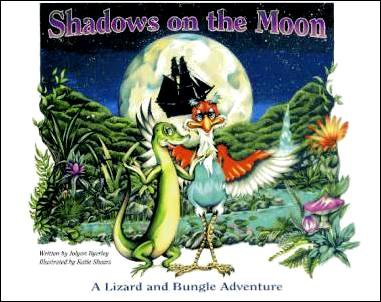
Animals in our stories seem to be limited to donkeys and goats, and perhaps a cow or two, often  in the idyllic setting of the good old rural days. (I have a published story about a boy and a goat!! It's a modern story so I hope it passes muster. Also, Miss Bettina's House ( Carlong) features domestic and farm animals. ) There are only a few books featuring our wild life - lizards, birds, mongooses; and some domestic animals - cats and dogs etc.
I like to challenge my writing class to think about our environment for ideas for their children’s stories. Take fish, for instance. We have a number of interesting names for our fish – grouper, parrot, butter, king, snapper, and, more recently, the lion fish. What could a writer do in a fish story using those names!
 
Some years ago, deer escaped from a circus during a hurricane. I haven’t seen any, but people in the hills say they are multiplying. This is a new creature in our environment. What possibilities for stories! And it doesn’t have to be fiction only. Children, particularly boys, respond to non-fiction stories about the environment.


On her anansesem facebook page Summer Edward has been featuring children's book covers from different Caribbean countries. I have taken the liberty of copying a few relevant to this discussion. Check her pages. You will find that there aren't many books featuring animals
http://www.facebook.com/anansesem.caribbeankidsmagazine?v=photos