Thursday, December 30, 2010

Caribbean children's books - As we enter 2011


One of my new year’s resolutions is to try to catch up on the technology as it relates to books, their promotion and sales. Thankfully, in 2010 Caribbean publishers began to be more aware of the possibilities of e-publishing and using the Internet for promotion and sales.  Frankly, as a writer, I am looking forward to increased royalties from this new thrust.

One of the ways of keeping up with the changes is to subscribe to newsletters and blogs which give information on what is happening. Everybody seems to have a blog these days  - publishers, agents, writers- you name it: OR/AND they are on Facebook and Twitter ( among other social media). Information overload!!!! One has to choose carefully which to follow.

A very useful newsletter I subscribed to in 2010 is publishing perspectives. com. The articles update the reader on activities and trends in the publishing industry - worldwide.

Here’s a teaser from this page
Imagine the future of books not as physical objects, but as relational databases…
  • Autobiographies, written in semi-real-time as the authors live their lives
  • Massively multi-reader “Choose Your Own Adventure”-like role-playing books where everyone’s choices shape the story
  • Serialized novels, like David Copperfield, only infinite and with alternate story lines
  • Recipe books that keep growing and puzzle books that always have more puzzles
  • Multimedia automobile manuals that self-update by pushing recall warnings and maintenance reminders out to you and to mechanics around the world, who then share their fix-it tips with each other and with everyone else
  • Textbooks where student annotations, highlights, and notes are more valuable than the original text, so much so that students can monetize their contributions
  • Series of technical books built with shared chapters: an update to a chapter in one book automatically updates every book in which that chapter appears
I am fascinated by the possibilities for the future of writing. What do you think?


Remember to vote for my book A Goatboy Never Cries at  http://www.bookindustryja.com/children_chapter_book_nominees

Thanks for reading my blog in 2010A happy and prosperous new year to all

Sunday, December 19, 2010

Christmas inspiration for children's story


In my latest book for children Bernie and the Captain’s Ghost, the protagonist and the other five children in the story are all physically handicapped in some way. This is not very common in Caribbean stories; we still have a way to go in accepting and nurturing our disabled people. I have been asked why I chose to make these children disabled.  As usual with the creative process, one is never really sure, but I think the following experience had something to do with it.

For a long time in my house, Christmas was always an anxious time, and I went through the motions but didn't really enjoy it all much. This Christmas, many years ago, changed things, a bit,

One of my daughters having graduated from Mico with a teaching diploma specializing in Special Education went to teach at a school which catered for the disabled.  As Christmas approached and I had my usual anxiety about how it would go, I had an idea to change things. I asked her if the matron of the home where most of the children lived would allow a few to come to us for Christmas day. She was given permission to take six of them home with her, (I think it was because she was a teacher at the school) and we set about preparing for the day. 

By Christmas day my attitude had changed. I realized that in thinking about how to make the children comfortable and give them a meaningful experience, I had forgotten my own fears and negative approach. With my other children we went shopping for presents for the children and took pleasure preparing the Christmas dinner adding things we thought they would specially enjoy.

Not having been around the disabled, I wasn’t sure what to expect, but the day turned out to be very satisfying. We were all happy as we worked to make the children feel special, helping those who needed help and so on..  We enjoyed their laughter and pleasure in some of things we had organized for them, and forgot our petty jealousies, anxieties and other (to be truthful) quite selfish woes.

I think what struck me most was that in spite of their physical disabilities they were just - children.Many years later when I came to write Bernie and the Captain’s Ghost, I think it was those six children who ended up in the story having a wonderful adventure as they solved the mysteries at Green Valley  during a strange summer holiday.

P.S.  It would be nice if some good Samaritans would contact Carlong and purchase some books to give to Children's Homes. These kids don't often see themselves as heroes in stories.
Carlong contacts:
webpage http://www.carlongpublishers.com/view_book_details.php?id=206&sid=32&lid=13
email marketing@carlongpublishers.com
phone: 876 9609366
My thanks


Sunday, December 12, 2010

Caribbean children's fiction - A child's view of Christmas

For Daniel
I love Christmas. Presents!  I love Christmas. Presents! That’s mostly what I can think of. This last week of school is not nice. The days just seem so long, while I wait for Christmas. Presents!

Mrs. Chin says we have to practise for the Christmas concert.  Every December we have to practise songs and plays and stuff to amuse our parents. My class is doing the Nativity scene. Someone gets a dolly and puts it in a cradle, and there’s a Mary and Joseph and wisemen and shepherds and angels.

I want to be Joseph, but Mrs. Chin says I have to be an angel. The angels have to sing a whole lot of songs. I am not going to remember them.  I want to be Joseph to help Mary open the presents the wisemen bring for baby Jesus. We‘re not supposed to open  them but last year the girl who was Mary said she didn’t know what Franky sense and Myrth were, but she thought the gold would be a chain or a bangle she could wear.  I think she forgot that Jesus was a boy. Mrs. Chin warned this year’s Mary not to touch the presents, but since she didn’t warn Joseph, If I was Joseph, I would open them.

Anyway, only the bright sparks Melvin and Joanna know  the words of the songs we angels have to sing, so this morning I asked Mrs. Chin If I could be the angel Hark. 

“There’s no such angel.” she barks at me.She doesn't have much patience at this time of year.

“Oh yes,” I tell her.  “He’s the angel who sings, you know ‘Hark, the herald angel sings’” Jeez, you would think  Mrs Chin would know that. If I am Hark I only have to sing ‘Glory to the newborn king’.

Mrs. Chin looks at me with that look grownups have when they are trying not to laugh, then she runs out of the room.Maybe she needs to use the bathroom. Soon we hear laughter coming from the staffroom. Somebody is giving jokes. I guess they are happy. It’s Christmas. Presents!

 I wish Mrs Chin would hurry up and come back. I am ready to be Hark and sing my one line: ‘Glory to the new born king .’ over and over. I can do that real good.

Please vote for my chapter book A Goatboy Never Cries at http://www.bookindustryja.com/vote_children_chapter_book_nominee

Thursday, November 25, 2010

Animals in our children’s books

Being an island, we don’t have a wide variety of animals in Jamaica. We inherited lions and tigers and other continental animals in our Anansi stories from Africa. The steady diet of books from foreign countries means that our children mostly see a lot of bears and wolves and elephants and giraffes and so on .

Once, some years ago my young daughter came home with an assignment from school; she had to draw an animal. When I asked her what kind of animal she wanted to draw, she said :”A squirrel, of course.”  I asked her why she didn’t pick one of our own animals since we don’t have squirrels in Jamaica. I could see her thinking about this with a kind of surprised look on her face. Then she said : “We don’t have any animals.” As far as she was concerned the only valid animals were those in books and on television.

The children are probably wiser now, but we still don’t see a lot of our own fauna in the children books. We could raise the children’s consciousness of our environment if more of our books featured our own animals.

Read some interesting findings on the value of animals in children’s stories in this article:
Animals and nature are top page-turners for children across generations, says new reader research At http://www.pearson.com/media-1/pearson-news/?i=1336

The research is based in the UK but it certainly provides food for our own thoughts. Local research- anyone?  Here's an excerpt:
Booktime’s research, which polled over 1,500 parents and carers across the UK, also showed that reading books featuring animal characters motivates children to find out more about the natural world: 44% of children are inspired to want to go to a farm, zoo or safari park to see the animals for themselves. 90% of respondents stated that reading books about animals increases their child’s interest in the natural world and more than half of Britain’s parents report that their children are more inquisitive about animals and nature after reading a book on the subject.
One of the reasons for this enduring call of the wild was hinted at elsewhere in the research with parents and carers overwhelmingly agreeing that animal and nature themed books help their children to make sense of human feelings, relationships and the world around them.(my emphasis).

Generally, in our population, any animal not meant for food is considered more or less unimportant,or to be feared.  We fear lizards, snakes,crocodiles, toads and many of the creatures around us. Boys and dogs are natural enemies. A pet, apart from a dog or cat which might be useful for watching the home or catching mice would be considered a luxury in many households. 

Our folktales sometimes add to our discomfort with the animal kingdom. Take the galliwasp, for instance:  very ugly – looking. Folklore says if it bites you, whichever of you finds water first will live, the other will die. So, if bitten by a galliwasp, rush to the nearest pipe and put water on the spot. I don’t even know if it can bite and nobody knows what water has to do with surviving the bite, but we repeat the story for generations.
Here’s  a definition of the galliwasp: A large, harmless lizard found in marshes in the West Indies and Central America
And another:  A West Indian lizard (Celestus occiduus), about a foot long, imagined by the natives to be venomous.

Animals in our stories seem to be limited to donkeys and goats, and perhaps a cow or two, often  in the idyllic setting of the good old rural days. (I have a published story about a boy and a goat!! It's a modern story so I hope it passes muster. Also, Miss Bettina's House ( Carlong) features domestic and farm animals. ) There are only a few books featuring our wild life - lizards, birds, mongooses; and some domestic animals - cats and dogs etc.
I like to challenge my writing class to think about our environment for ideas for their children’s stories. Take fish, for instance. We have a number of interesting names for our fish – grouper, parrot, butter, king, snapper, and, more recently, the lion fish. What could a writer do in a fish story using those names!
 
Some years ago, deer escaped from a circus during a hurricane. I haven’t seen any, but people in the hills say they are multiplying. This is a new creature in our environment. What possibilities for stories! And it doesn’t have to be fiction only. Children, particularly boys, respond to non-fiction stories about the environment.


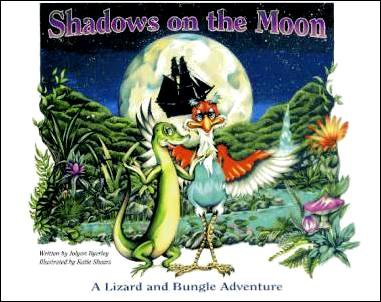
On her anansesem facebook page Summer Edward has been featuring children's book covers from different Caribbean countries. I have taken the liberty of copying a few relevant to this discussion. Check her pages. You will find that there aren't many books featuring animals
http://www.facebook.com/anansesem.caribbeankidsmagazine?v=photos


Tuesday, November 23, 2010

Why a Goatboy?

I have been asked why the name goatboy in the title of my latest chapter book for children which is A Goatboy Never Cries. Here's an extract from the story which explains it. Jillian is the story teller of that exceptional summer holiday when her family moves to the suburbs of Kingston and the children in the family find themselves with new daily chores. She has to help her mother take care of chickens and her brother Johnny has to take care of a goat. He dislikes the experience, at first, but grows to love the goat as a pet.
" At first, Johnny's new friends ridiculed him. His new name was 'goatboy'. I thought it was a stupid name, but, I suppose, if there were 'cowboys'to take care of cows, there could be 'goatboys' to take care of goats and 'pigboys' to take care of pigs and so on. However, I don't think I would like anybody to call me a 'chicken girl' OR WORSE, a 'fowl girl'.

available from LMH Publishing Ltd
Tel:876 938-0005
Fax: 876- 759-8752
email: lmhbookpublishing@cwjamaica.com


Wednesday, November 17, 2010

The Importance of book covers


Summer Edward on her facebook pages has been posting book covers from various Caribbean Islands. So far she’s posted covers from Cuba, Jamaica, Trinidad and Tobago, Barbados, Haiti and Grenada. I thought I had seen a post on her blog specifically on the importance of a book cover, but I couldn’t find it. Her comment below on illustrations for Caribbean children’s books might be relevant though, as the illustration is actually the most important component of a cover, especially for children's books. Check the covers she has posted and judge for yourself.


Looking at many of the illustrations in Caribbean picture books, I might be tempted to say that Caribbean artists are simply not that talented. This I know, is far from the truth. There is abundant, fantastic artistic talent in the Caribbean. What is missing in our region, is a sense of the importance of the role of the children's illustrator. Also, many of us do not yet understand that works of children's illustration are as much "fine art" as the creations we see displayed in Caribbean art galleries and museums. Caribbean artists fail to see children's illustration as the lucrative business and fine artform that it is, and we are decades behind continental children's illustrations (UK, Asia, USA, Africa) in this sense. So that is where we are right now in Caribbean children's illustration: abundant talent to choose from, but no cohesive, well-respected children's illustration field/industry with ties to an organized, professional and active Caribbean children's publishing mechanism with plenty and sustained work opportunities for illustrators

I may get some grief for this, but I am going to say it anyway: I simply don't think Caribbean children's illustration as it stands today is all that great. I mean the work that currently appears in published Caribbean children's books. To put it plainly, Caribbean children's illustration as it looks today, lacks versatility, seriousness (in the sense of professionalism) and sustained effort. Caribbean children's illustrators (who by the way, are a small group) simply haven't been inventing much, and we are waaaaaay behind our continental counterparts in this respect. Much― and that is not all, there is some great work out there― but again, much of the illustration currently appearing in Caribbean picture books is basically clichéd: cute, simplistic, uninventive, cartoony, and computer-generated. ( my emphasis)
http://summeredward.blogspot.com/2010/06/caribbean-picture-books-importance-of.html

Publishers sometimes consult, but do not  give authors control over/input into the design of their book covers. (My publishers are not adverse to a suggestion, but this is in the laid-back Caribbean) Self-publishers of course have that full control. Both need to pay very serious attention to cover design.  Here are some reasons why.
Importance of book covers
·           Shoppers in a bookstore spend an average of 8 seconds looking at the front cover of a book and 15 seconds looking at the back before deciding whether to buy it.
·           A survey of booksellers showed that 75% of them found the book cover to be the most important element of the book.
·          Sales teams often only take the book cover with them when they shop titles into stores.
From: http://www.sellingbooks.com/10-mistakes-authors-make


What goes into the making of a design for a book cover?  Obviously the story itself - what it is about and the intended readership. Decisions about typeface, size – those technical details are taken on the basis of these considerations.The art brief from the editor will give the illustrator guidelines for the cover illustration. Judging what will make a book stand out on the shelf is not often easy. Sometimes it works, sometimes not. Some people may like a cover, others may not – usually the detractors cannot give an objective reason for disliking a cover.

Another  consideration  for our books is also whether the illustrator is familiar with and understands the Caribbean origin of the story. We all have to be very careful not to fall into the category highlighted in the last sentence in Summer’s quote.

Wednesday, November 10, 2010

I love my hair

You've got to check this!

watch the video


The longing for silky, long hair is still a problem for black children!! What are we writers doing to consciously send the message that black hair is okay: that our hair was designed for us - whatever its texture, colour, length. and it doesn't have to be a book about hair  - just one of the many affirmative messages about ourselves that we need to interweave in our stories.And if anybody dares to comment on prejudice, reverse or otherwise - . I'll delete the comment. Read the reason it was made then just watch the video and ponder

Monday, November 8, 2010

BIAJ chapter book nominations

My chapter book A Goatboy Never Cries has been nominated for the People's Choice award by the Book Industry Association of Jamaica  (BIAJ)
http://www.bookindustryja.com/children_chapter_book_nominees

What about it folks. Buy a copy from a bookstore in Jamaica or go to the LMH website


Read it and decide if you want to vote for me.

I am repeating an earlier post about it here


My new book A Goatboy Never Cries has been getting good reviews.
Here's an excerpt from the Sunday Gleaner of May 23
'
"A Goatboy Never Cries , a 13 chapter book, tells it all. Illustrations which appear in 10 chapters make the book fun to read and will help push the imagination, especially for those children whose knowledge of the countryside is limited. ....
Although a simple tale, Campbell uses the story to address themes such as family, friendship, love, loyalty and responsibility."

In the story Johnny, who has never owned a pet, is forced to take on the responsibility of looking after a young goat during his summer holidays. His initial rebellion changes as he learns to love the goat- which in turn presents new problems when the summer holidays end and there is no one to take care of it.


Traditional Christmas Entertainment - Jonkunnu in Jamaica


"Jonkunnu a Come"


In Jamaica, up to the fifties and sixties, at Christmastime masked Jonkunnu bands (masquerade) could be seen roaming the streets of towns all over the country playing their lively music, dancing and prancing to entertain the crowds which would quickly assemble, as a prelude to collecting money. 


Although a few straggling groups may still come out in the rural areas, sadly, Jonkunnu bands no longer roam the streets of our towns and they are now seen mainly as entertainment at cultural events. Today's children are missing out on the heady feeling which a Jonkunnu band could add to the already magical Christmas season. The fear inspired by Horsehead snapping at you or the Devil trying to jab you with his trident cannot adequately be described. Both adults and children would run when they started their antics. I don’t think anybody actually got hurt. It was great fun all around.

And the music !!!!  Fife and drum which immediately set your feet and body dancing . I have very fond memories of the excitement created when the first strains reached my ears and the cry of “Jonkunnu a come!” started up. 


My favourite character was Pitchy - Patchy. In his costume made of pieces of brightly coloured material, he would dance up a storm twirling and twisting every which way. I didn't like the 'policeman'
who would wield his baton in attempt to 'control' the band and the onlookers. and as for the Devil - "RUN!"

Incidentally the band was made up of all men, even bride and belly woman whose exaggerated pregnant belly seemed to have a dancing life of its own, separate from her body. All the characters wore a mask of some sort.


Friday, November 5, 2010

Author involvement in selling books

Nobody can deny that authors should help to promote and sell their books. This seems to be standard procedure in the big countries. I find though that the author/publisher situation in the Caribbean, especially for trade books, is sort of unknown territory.

Text books don't need author involvement in the same way, and most of our publishers - the bigger ones - specialize in text book publishing - it is, after all, their bread and butter

But for the trade books - take the business of authors getting copies of their books. If you have a good ongoing relationship with your publisher, chances are you can get copies on consignment. But here's the problem , you have to sell off what you take in a limited time, or return the books or pay for them.

Now, I am supposing that most Caribbean authors are like me with limited disposable income to wrap up in purchasing significant copies of their books, unless there is certainty of sales. It's usually a few books sold here and there, even at literary functions. But, one never knows when an opportunity might arise for a sale, and it is useful to have books at hand.

Personally, I have a good relationship with my publishers, but I know other writers who complain about the reluctance of publishers to give books on consignment. (In fairness some publishers have problems getting payment even for books on consignment to bookstores)  But, since the publisher is in charge of royalties and can withhold the payment for the books the author has taken, why the reluctance?

What do you think? (My comments section should be working now)

Saturday, October 30, 2010

Book review #1 - Little Island-Big Adventures

Here is a Caribbean children’s book which is immensely interesting as it gives a glimpse of life in the 1960s on one of the tiny Grenadine islands owned by Grenada in the Eastern Caribbean. (You may need to consult a map of the Caribbean) The author deliberately does not name the island which is the setting for the story, and it is my belief that the story is largely autobiographical. Life on this tiny island is both a pleasure and trial. There is no electricity, no police presence, one school, and one church. Children attend school barefooted, but there is no sense of deprivation.

The island is described by someone who is obviously fond of it, and wishes to preserve a bit of its history and the customs peculiar to its culture. In this first person story, Sara-Ann tells us about that last delightful year spent on her beloved island. She and her best friend, Ruben, get up to a lot of antics during a very busy school year filled with a witch, a bad bull, a giant cat, a graveyard adventure, a jealous school friend, a jilted bride and other exciting events. The language might seem sophisticated, in parts, for an eleven to twelve year old, but this protagonist is presented as being precocious, a very avid reader and a highly imaginative child.

Here’s an excerpt from one of my favourite incidents: Sara-Ann and Ruben are in an old crypt in the graveyard at midnight on All Saints' Night planning a prank against a very irritating fellow student – Elsie:
The darkness was complete. So complete it snatched away my breath, smothering me like a thick blanket. I gasped, struggling for breath. I had never been as afraid as I was of that dreadful place.
Suddenly , without warning, a light flickered on.I shrieked and turned to flee, but Ruben caught me by the arm. “It’s only my flashlight,” he said, holding up a small one.
Light … light… light …light

The style of this novel is episodic, that is, almost all the chapters can stand on their own as short stories. Therefore there is not the kind of cause and effect development of plot, building to a strong climax. Although there is action aplenty as Sara-Ann and Ruben get in and out of scrapes, the story is more character driven as we learn about several of the people who live on the island and their interaction one with another,
This story celebrates family, friendship and community. Its strengths are in descriptive language and characterization. It is a good introduction to the study of literature at grades 6 or 7.

There is a glossary which explains words and phrases which are peculiar to that part of the Eastern Caribbean in which the story is set

Author Maria Roberts-Squires was born in Petite Martinique, schooled in Grenada and now lives in Barbados. This is her second novel for children.

Book link here
marketing@carlongpublishers.com
Sorry I had to re-post this. Something went wrong with the first post and messed up viewing of the blog